

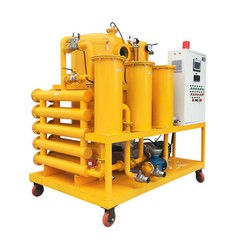
Let me start by sharing something I hear almost every week from new customers who call our lubricating oil purifier team: "My machine's sludge is out of control. Can your equipment actually get rid of it, or am I just wasting money?"
I get it. Sludge on lubricating oil is a persistent, sneaky problem. You might notice it first as a sticky residue around pump seals, lower viscosity readings that make your maintenance team panic, or a sudden spike in equipment wear parts that were supposed to last years. When sludge builds up, it doesn't just "clog things a little"-it starves moving parts of proper lubrication, generates excess heat, and can even cause unplanned downtime that costs tens of thousands of dollars in a single day.
Today, I want to cut through the myths and get straight to the science: yes, a properly designed lubricating oil purifier can remove sludge from oil-but not all purifiers do it the same way. Let's break down what sludge actually is, why it's so hard to get rid of, and how our equipment solves this problem for hundreds of industrial operations every month.
First: What Is Sludge, Exactly?
Before we talk about solutions, let's define the enemy. Sludge in lubricating oil isn't just a random gunk-it's a complex mixture of unwanted byproducts that form over time as oil breaks down. When oil is exposed to heat, oxygen, and pressure from industrial machinery, its long hydrocarbon chains oxidize into smaller, heavier molecules. Some of these molecules bond together to form insoluble compounds: things like oxidized asphaltenes, petrochemical residues, metal particles from wear, water, and even small amounts of dirt or ash from the environment.
Unlike tiny particulate contaminants that can be filtered out with standard mesh screens, sludge is often a gel-like, semi-solid substance that's just small enough to slip through basic filters. It sticks to surfaces, coats internal machinery parts, and can clog standard filtration systems in hours if they're not designed to target it specifically. A 2022 study from the Society of Tribologists and Lubrication Engineers (STLE) found that sludge buildup is responsible for 37% of premature lubricant failure in heavy machinery, and 28% of unplanned shutdowns in hydraulic systems-numbers that make it one of the top maintenance headaches for plant managers.
How Lubricating Oil Purifiers Target Sludge: The Science Behind the Cleanup
Now, let's get to the good stuff. Not every oil filter is built to remove sludge-many are designed only to catch large particles. A high-quality lubricating oil purifier uses a combination of core technologies that work together to break down, separate, and remove sludge from oil, even when it's deeply mixed in. Let's walk through how these technologies work, and why they matter for sludge removal.
First, most sludge is heavy, or mixed with water that's bound to the oil molecules. That's why one of the most effective steps for sludge removal is vacuum distillation. This process works by heating oil to a controlled temperature (usually between 180–220°C, depending on the oil type) in a low-pressure vacuum chamber. Lowering the pressure lowers the boiling point of water and light oil fractions, so they evaporate without breaking down the oil itself. When sludge is exposed to this environment, its insoluble compounds separate from the oil's base stock because their molecular weight is too high to evaporate-so they sink to the bottom of the chamber, where they're collected and removed.
Next, even after vacuum distillation, some small sludge particles can remain suspended in the oil. That's where coalescence filtration comes in. Coalescence filters use specialized media that attracts small water and sludge particles, forcing them to clump together into larger droplets. Once clumped, these larger droplets are easy to separate from the oil stream. This is a key technology for applications like hydraulic oil systems, where sludge often contains a mix of water and fine metal shavings. For example, our Hydraulic Oil Purification Machine is designed with dual coalescence stages that target both free and emulsified water, along with 99.9% of suspended sludge particles-something standard hydraulic filters can't do.
Another technology that's critical for sludge removal is deep bed filtration. Unlike standard surface filters that only catch particles on their surface, deep bed filters use layers of porous, granular media that trap sludge particles throughout their structure. This means they don't clog as quickly as surface filters, and they remove even the smallest sludge fragments that can cause long-term equipment damage. Many customers ask about the difference between deep bed filtration and other methods-we've found that combining deep bed filtration with vacuum distillation gives the best results for sludge-heavy oil.
Wait, but what about all the "cheap" oil filters you can buy online? I see the value for small applications, but when you're dealing with industrial machinery running 24/7, standard off-the-shelf filters just aren't enough for sludge. A single large compressor or steel mill pump uses thousands of liters of lubricating oil, and even a small amount of unremoved sludge can turn into a big problem fast. That's why we design our lubricating oil purifiers to handle high-volume, continuous operation without sacrificing filtration quality.
Real-World Proof: How Our Equipment Removes Sludge (And Saves Customers Money)
I don't want this to just be theory-let's talk about a recent example. A paper mill in the Midwest contacted us last year because their hydraulic oil system was failing every 6 months due to sludge buildup. They were using standard hydraulic filters that needed changing every 2 weeks, and they still had constant pump wear and filter clogging.
We installed one of our Hydraulic Oil Filtration Units, which combines vacuum dehydration, coalescence, and deep bed filtration, on-site in 2022. The results? After the first 30 days, sludge levels dropped from 1.2% (the threshold for damage in hydraulic systems) to 0.08%. That's a 93% reduction in sludge in just one month. The mill hasn't had a hydraulic pump failure since, and they've cut their oil replacement costs by 45% because they're no longer flushing and replacing sludge-contaminated oil every few months.
This isn't an isolated case. We've worked with mining operations, power plants, and construction companies to solve sludge problems, and in almost every case, the key was using a purifier designed to target sludge specifically. One common mistake we see: customers trying to "clean" oil by just filtering it with a standard filter cartridge. That might catch some large particles, but it doesn't remove the gel-like sludge that's mixed deep in the oil. It's like trying to clean mud off a car with a tissue-it won't work.


What to Look for in a Purifier to Remove Sludge
If you're shopping for equipment to remove sludge from your lubricating oil, here are the non-negotiable features to look for:
- Vacuum distillation capability: As we talked about earlier, this is the only technology that can break down and separate heavy sludge compounds from the oil's base stock. Without vacuum distillation, you're only removing surface sludge, not the contaminants that cause long-term damage.
- Coalescence and deep bed filtration: These two steps catch the small, remaining sludge particles after distillation, so you get oil that's as close to fresh as possible. A good purifier will combine these, not just rely on one.
- High flow rates for your application: You don't want a purifier that takes 24 hours to clean a 1000-liter tank. Look for equipment sized to match your system volume and run 24/7 if needed.
- Certifications and compatibility: Make sure the purifier is designed for your oil type-hydraulic, turbine, compressor, or another industrial lubricant. Our Lubricating Oil Filtration Equipment is tailored for all major industrial oil types, and we offer models for both small workshop setups and large, continuous industrial operations.
My Experience as a Purifier Supplier: The Biggest Mistakes I See Customers Make
The most common mistake is thinking that all oil filters are the same. A standard automotive filter or a cheap bulk filter might work for a car's engine, but industrial lubricating oil systems handle far more stress, heat, and contamination.
Another mistake is waiting too long to address sludge. I had a customer last year who waited 18 months to clean sludge from their turbine oil. By that point, the sludge had already coated the turbine's bearings, causing enough wear to require a $200,000 replacement. If they'd used a purifier to remove sludge at the first sign of sticky residue, that cost would have been a few thousand dollars for the equipment-and avoided downtime that cost millions in lost production.
We also get a lot of questions about Used Oil Filtration-many customers want to know if cleaning used oil with sludge in it is even worth it. The short answer: yes, in most cases. Our Waste Oil Purifier Machine is designed specifically to handle heavily contaminated oil with high sludge levels, and we've had customers reuse oil that was written off as "too far gone" after our equipment processes it. We recently cleaned a batch of gear oil that had 2.1% sludge, and after processing, it met all ISO cleanliness standards and was reused for another year-saving the company over $12,000 in new oil costs.
The Bottom Line: Can a Lubricating Oil Purifier Remove Sludge?
To wrap this up: yes, a well-designed lubricating oil purifier can absolutely remove sludge from lubricating oil, and it's one of the most cost-effective ways to prevent equipment damage, reduce downtime, and extend oil life. The key is choosing a purifier that uses the right combination of technologies (vacuum distillation, coalescence, deep bed filtration) to target sludge's unique properties, rather than a basic filter that only catches surface particles.
If you're dealing with sludge buildup in your industrial machinery, don't wait for a shutdown to act. A good purifier will pay for itself in a matter of months, through reduced oil replacement costs, less maintenance, and fewer unplanned stops.
We've helped hundreds of operations solve their sludge problems, and we're ready to help you too. Whether you need to clean hydraulic oil, turbine oil, gear oil, or any other industrial lubricant, our team can work with you to find the right equipment for your needs. Don't hesitate to reach out to our team to discuss your specific application and get a customized solution for your sludge-related challenges.
References
Society of Tribologists and Lubrication Engineers (STLE). (2022). Sludge Formation in Industrial Lubricants: Causes, Impacts, and Mitigation Strategies. STLE Transactions, 65(3), 412-425.
International Organization for Standardization (ISO). (2019). ISO 4406: Hydraulic fluid power-Filtration-Codes for the contamination level of fluids. Geneva, Switzerland: ISO.
American Petroleum Institute (API). (2021). Lubricant Degradation and Contamination Control for Industrial Machinery. API Publication 1584.