

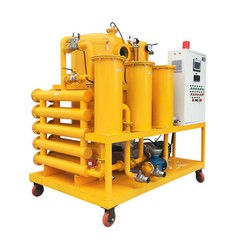
If you’ve ever spent time around industrial machinery, you know how much hydraulic power units (HPUs) keep things running—think factory assembly lines, construction cranes, even heavy farm equipment. But here’s the thing: HPUs only work as well as their hydraulic oil. Over time, that oil gets dirty, right? With metal particulates, water, varnish, air bubbles—all the stuff that wears out pumps, clogs valves, and leads to costly downtime. As someone who’s been in the hydraulic oil filtration system game for years, I get asked all the time: Can a hydraulic oil filtration system actually be used with a hydraulic power unit? Spoiler alert—yes, it’s not just possible, it’s basically a must. Let me break this down like I would for a guy in the shop who’s dealing with a HPU that’s been on the fritz for weeks.
First, let’s make sure we’re on the same page about what each part does. A hydraulic power unit is the heart of hydraulic systems—it pumps pressurized oil to cylinders, motors, and other components to move heavy loads. But HPUs are closed systems, not 100% sealed. They suck in tiny amounts of air when components cycle, moisture can seep in through condensation or poorly sealed ports, and as metal parts rub together, they shed micro-particles that get suspended in the oil. That’s where hydraulic oil filtration systems come in: they’re designed to clean that oil, removing contaminants before they cause damage.
Wait, but why not just use a random oil filter? Because not all filtration systems are made the same. I see guys grabbing a filter from a lube oil treatment machine one minute and a portable oil filtration system the next, and they mix them up like they’re interchangeable. Let’s clarify: hydraulic filtration is tailored to the unique needs of HPUs. HPUs run at specific pressures, have particular flow rates, and their oil needs to stay at a consistent viscosity. A good hydraulic filtration system is sized to match the HPU’s flow—you don’t want a system that’s too small (it can’t keep up with contaminant buildup) or too big (it wastes energy). Some systems even have built-in pressure gauges that sync with the HPU’s controls, so if the oil gets too contaminated, it kicks on automatically.
Let’s talk about the real-world proof, because I don’t like to sell something without showing it works. A few months back, we had a client with a 500-ton HPU running a stamping press. Their old filter only caught big particles, so their pump was failing every 6 months—costing them $15k each time in parts and downtime. We installed a high-flow hydraulic filtration system that ran in line with their HPU’s bypass loop (that’s a little side circuit most HPUs have that doesn’t carry full load pressure). Within 3 months, their pump wear was down 80%, and they haven’t had to replace it in over a year. That’s the kind of win that makes this job worth it.
A lot of people ask, “Can’t I just use a transformer oil purifying unit or turbine oil cleaning system for my HPU?” Fair question! But let’s be real—those are designed for specific applications. Transformer oil purifiers, for example, are built to handle high-voltage, dielectric fluid, with filters that remove moisture and gases that are critical for electrical insulation, not for the metal particulates and pressure needs of a HPU. Turbine oil systems, on the other hand, focus on handling very large volumes of oil at low pressures, which doesn’t match the medium-pressure flow of most HPUs. They can work in a pinch, but they’re not optimized, so you might end up spending more for something that doesn’t do the job as well. Same with a waste oil recovery machine—those are for recycling oil that’s too far gone to use, not for maintaining clean oil in a running HPU. A portable oil filtration system, though? That’s a different story. If you have multiple small HPUs, a portable unit you can move from one to another makes total sense. We’ve got clients with 10+ small HPUs on a warehouse floor that use our portable systems to rotate cleaning between them—saves them a ton of money instead of buying a dedicated system for each.
Another big thing hydraulic filtration systems solve that a lot of people overlook: varnish. Varnish is that sticky, gummy residue that forms when oil breaks down from heat and oxidation. It coats the inside of the HPU’s valves and lines, slowing down response time and making the system less efficient. Regular filtration systems remove particles, but high-quality hydraulic filtration systems have special media that catches varnish precursors too. I’ve seen HPUs that were so coated in varnish they could barely lift a 500-pound load get back to full power in just a week of running our system. That’s not a magic trick—that’s targeted filtration doing its job.
Let’s address the “how” of actually setting this up, because it’s not just dropping a filter in and calling it good. There are two main ways to integrate a hydraulic filtration system with a HPU: online (in line, running when the HPU is working) or offline (bypass, running even when the HPU is idle, usually on a schedule). Online is good for heavy-duty applications where contamination is building fast, like outdoor construction HPUs that get exposed to dust and weather. Offline is better for industrial HPUs that run on a fixed schedule, since it uses less energy when the HPU isn’t under load. Most of our clients mix both—they run online during production hours and offline overnight when the system is quiet, so the oil stays consistently clean without wasting power.


I know cost is a big concern. Some guys think adding a filtration system is an unnecessary expense, but let’s do the math: a new HPU pump can run $10k–$50k, depending on size. Filtration systems? They cost a fraction of that, and regular filter replacements are way cheaper than replacing a pump. We had another client who skipped filtration and ended up with a valve failure that shut down their entire assembly line for 3 days. The downtime cost them $200k in lost orders—all because they thought filtration was a waste. That’s the kind of story that makes me want to yell from the rooftops: don’t skip this part.
Wait, but what about oil type? Does it matter if my HPU uses synthetic vs. mineral oil? Nope, good hydraulic filtration systems work with both. The filter media is engineered to catch contaminants regardless of oil base, as long as you size the system correctly. We’ve installed systems for everything from small farm equipment HPUs using mineral oil to large manufacturing HPUs with synthetic hydraulic fluid—never had a compatibility issue.
If you’re still on the fence about whether a hydraulic oil filtration system is right for your HPU, here’s a quick checklist: Do you have frequent pump or valve failures? Is your HPU’s cycle time slowing down for no reason? Have you had to top up oil more often than normal (that’s a sign of leaks or oil breaking down from contamination)? If you answered yes to any of these, it’s time to look into adding a filtration system.
Now, let’s talk about our products, since that’s what we do. We don’t just sell any filtration system—we build ones that are tailored to hydraulic power units specifically. We’ve seen how the wrong system can cause more problems (like backpressure that damages the HPU) and how the right one extends oil life, cuts downtime, and saves you money. Whether you need a dedicated system for a single large HPU, a portable unit to cover multiple small ones, or something in between, we’ve got options. And for those who work with other oil systems, we also offer units like the transformer oil purifying unit, lube oil treatment machine, turbine oil cleaning system, and waste oil recovery machine for other applications, but our hydraulic-specific stuff is where we really shine.
At the end of the day, a hydraulic power unit is only as reliable as the oil running through it. Contamination is inevitable, but you don’t have to let it kill your equipment. A quality hydraulic oil filtration system isn’t just an accessory—it’s a critical part of maintaining your HPU, extending its lifespan, and avoiding those dreaded costly breakdowns. If you’re ready to stop dealing with dirty oil and start getting the most out of your HPU, reach out to us to chat through your needs. We don’t do one-size-fits-all, and we’ll help you pick the right system for your specific setup, no pushy sales stuff, just honest advice that’ll save you time and money.
References
- Hydraulic Institute. (2021). Hydraulic System Contamination Control Best Practices. Retrieved from hydraulic.pump.org
- American Petroleum Institute. (2020). Hydraulic Fluid Filtration Standards for Industrial Applications. Retrieved from api.org
- Society of Tribologists and Lubrication Engineers. (2022). Effects of Contamination on Hydraulic Component Wear. Retrieved from stle.org
- Industrial Maintenance and Plant Operations Magazine. (2023). ROI of Proactive Hydraulic Filtration Systems. Retrieved from impomag.com