

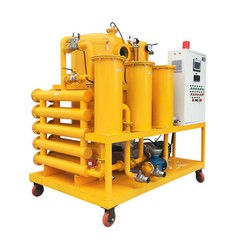
When I started selling industrial oil purification equipment three years ago, most of my clients were large-scale manufacturing plants, power generation facilities, and heavy machinery operations with massive, continuous oil systems. It wasn't until a small-scale farming cooperative in the Midwest reached out to me, frustrated with how they were managing their hydraulic oil for their grain drying equipment, that I began asking a question I still get a lot: Is a stainless steel oil purifier suitable for small-scale operations?
At first, I'll admit, I struggled to answer that clearly. Most of the marketing materials for stainless steel oil purifiers focus on heavy-duty, high-flow systems built to handle thousands of gallons of oil at a time. Small-scale operations-think small manufacturing shops, family-owned farms, local construction firms with a handful of pieces of equipment, or regional delivery companies-have very different needs. Their oil volumes are smaller, their equipment usage is more variable, and their budgets are tighter than those of industrial giants. As a supplier, my job isn't just to sell equipment; it's to help businesses make choices that actually work for them, no matter their size. So I spent the next year testing our stainless steel models with small operators, talking to mechanics, and analyzing their real-world pain points to figure out if these purifiers could fit into their workflows.
Let's start with what small-scale operations actually need from an oil purifier. For most of these businesses, oil isn't just a fluid-it's a critical part of keeping their equipment running without costly downtime. A construction company with five excavators can't afford to have one break down halfway through a job because their hydraulic oil is contaminated. A small food processing plant relies on gear oil for their conveyor systems; dirty oil can lead to seal failure, product contamination, and unplanned production stops. The top three pain points I hear from small operators are: inconsistent oil quality, unexpected equipment breakdowns that cut into profits, and the hassle and cost of disposing of used oil improperly. Traditional oil management for small operations usually means either changing oil frequently (which is expensive and wasteful) or doing nothing until problems pop up (which is even more expensive).
This is where stainless steel oil purifiers start to look appealing-if you pick the right model. A lot of people picture industrial stainless steel purifiers as giant, fixed units bolted to the floor of a power plant. But our line of equipment includes compact, portable stainless steel purifiers built for small spaces and variable needs. Take our Portable Oil Filtration Systems, for example. These are designed to move from one piece of equipment to another, so a small shop doesn't need a dedicated unit for each machine. For a small manufacturing shop with three CNC machines, this means you can filter all three machines' hydraulic or gear oil in a single afternoon, instead of paying a service to come out and change each machine's oil individually. The compact design also means it fits in tight spaces-no need for a separate equipment room. I've had a customer in a small custom woodworking shop who stores his purifier in the corner of his maintenance bay; it's small enough that it doesn't get in the way, but powerful enough to filter 20 gallons of oil in about 45 minutes, which is exactly what he needs to keep his planer and saws running smoothly.
Durability is another big win for stainless steel models, especially for small operations that can't afford to replace equipment often. Stainless steel is resistant to corrosion, which is a big deal for businesses that work in outdoor or humid environments-like farms, construction companies, or food processing plants where moisture is common. I had a conversation last year with a family-owned farm in Iowa that used a cheaper, aluminum oil filter for their tractor hydraulic system. Within a year, it had corroded from exposure to rain and fertilizer residue, and it started leaking metal particles into their oil, which damaged the tractor's hydraulic pump. When they switched to our stainless steel oil purifier, they told me it's been two years with no corrosion, even when they leave it outside in their equipment shed between uses. For small operations with limited cash flow, buying a durable unit that lasts for years is way better than replacing a cheap one every couple of years.
But here's the thing: stainless steel oil purifiers aren't one-size-fits-all. I've seen small operations make the mistake of buying a large, fixed industrial purifier that's overkill for their needs, and it ends up sitting in a corner unused because it's too big, too slow, or too expensive to operate. That's why portable models, like the Portable Oil Filtration Unit and Mobile Oil Filtration Unit, are game-changers for small-scale operations. Let's break down the numbers: for a small business with oil volumes under 100 gallons total across all their equipment, a portable purifier that processes 5–10 gallons per minute is more than enough to keep oil clean, without wasting energy or time on extra capacity. A large industrial purifier that processes 50 gallons per minute would take forever to filter small batches, and its energy costs would be a drain on a tight budget.
Another key factor for small operations is ease of use. Most small shops don't have a dedicated maintenance team with specialized training; it's usually one or two people who handle everything from fixing the coffee maker to changing the oil in the forklift. Our stainless steel portable purifiers are designed with simple, push-button controls, no complicated programming, and clear filters that are easy to inspect and replace. I remember a small auto repair shop owner in Ohio who told me he avoided using oil purifiers before because he thought he'd need to take a class to operate one. When he tried our Portable Hydraulic Oil Filtration Unit, he said he had it set up and running on his shop's lift within 10 minutes, and he's been doing his own oil filtration ever since-saving him hundreds of dollars a month on service calls for oil changes.
Now, let's talk about cost, because that's always the biggest concern for small operations. The upfront cost of a stainless steel oil purifier is higher than a disposable filter or a basic paper filter, but when you look at the long-term savings, it's a no-brainer for most small businesses. Let's do a quick example: a small construction company with four excavators, each holding 30 gallons of hydraulic oil. If they change the oil every 200 hours, that's 120 gallons of oil every oil change. At $8 a gallon for hydraulic oil, that's $960 every time they change all four excavators. Plus, disposing of used oil usually costs about $20 per 55-gallon drum, so changing that oil would mean paying to dispose of 100 gallons of used oil, which is another $36. That's almost $1,000 every oil change. If they use a portable stainless steel purifier, they can filter the same 120 gallons of oil 2–3 times before needing to change it, so they only buy a third of the oil, and they dispose of a third less used oil. Over a year, that's thousands of dollars in savings, and less downtime from equipment breakdowns caused by dirty oil. I've had customers tell me they paid for their purifier in less than six months from the oil savings alone.
Of course, there are still scenarios where a stainless steel oil purifier might not be the best fit for a small operation. If a business only has one small piece of equipment that only needs occasional oil changes, the upfront cost of a purifier might not make sense, and a simpler, lower-cost filter might be better. But for any small operation with multiple pieces of equipment that run regularly, and where downtime costs money, a stainless steel oil purifier is worth looking into. It's also important to match the purifier's capacity to your needs-don't buy a unit that's too big, but don't buy one that's too small either. That's why I always tell small operators to talk through their specific needs with a supplier, not just buy the cheapest or the most portable model.


One of the biggest surprises I've had working with small operations is how much they care about sustainability. Small businesses are often more connected to their local communities and their impact on the environment than large corporations, and oil waste is a big pain point for them. Disposing of used oil improperly can contaminate soil and water, and many small operations want to do the right thing. A stainless steel oil purifier reduces the amount of oil they need to buy, and the amount of waste they send to landfills or oil recycling centers. For example, a small food processing plant I work with in Pennsylvania used to dispose of 50 gallons of used oil every month; after using our stainless steel purifier, that's down to 15 gallons a month. They now advertise that to their customers, who appreciate that they're a sustainable local business, which has actually helped them attract more clients.
I've also noticed that a lot of small operators don't realize that oil filtration isn't just about removing debris-it's also about removing water and contaminants that cause oil to break down. Water in oil can cause corrosion, reduce lubrication, and lead to equipment failure. Most portable stainless steel purifiers come with built-in water separation technology, which is critical for businesses that work in wet environments, like farms or outdoor construction. A customer in Florida who runs a small landscaping business told me that their hydraulic oil would get water in it every time it rained, and they'd have to replace the tractor's hydraulic pump every year. After using our stainless steel purifier with water separation, they haven't had to replace a pump in three years. The purifier pays for itself quickly when you avoid those costly replacement parts.
At the end of the day, the answer to whether a stainless steel oil purifier is suitable for small-scale operations is not a simple yes or no-it depends on your specific needs, equipment, budget, and goals. But from what I've seen over the past three years, for most small operations that rely on equipment to make money, it's a worthy investment that saves time, reduces costs, and helps avoid unnecessary downtime. If you're a small business owner struggling with oil management, I'd encourage you to look at portable stainless steel models, like the ones we offer: Portable Oil Purification Machines. These are built to work for small spaces, small oil volumes, and tight budgets, without sacrificing the durability and performance of stainless steel.
If you're curious about how a stainless steel oil purifier could work for your specific operation, don't hesitate to reach out to discuss your needs. Every business is different, and I'm happy to help you find the right solution that fits your budget and your workflow. Whether you're a small manufacturing shop, a family farm, a local construction company, or any other small-scale operation, there's a stainless steel purifier that can work for you.
References
- International Organization for Standardization. (2020). Petroleum products and lubricants - Hydraulic fluids - Specifications. ISO 11158:2020.
- United States Environmental Protection Agency. (2022). Used Oil Management Best Practices for Small Businesses. EPA 530-F-22-001.
- Society of Tribologists and Lubrication Engineers. (2021). Oil Filtration Efficiency and Equipment Reliability: A Small Business Guide. STLE Publication No. TG-2021-003.