

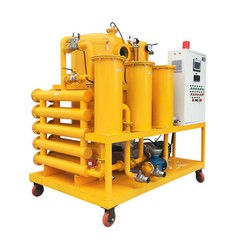
If you've ever walked through a manufacturing plant, a fleet maintenance bay, or a construction site, you've probably seen barrels of used lubricating oil sitting in corners, stained dark and thick with grime. For many equipment operators, the first thought is to replace that oil-an expensive, wasteful cycle that adds hundreds of gallons of hazardous waste to landfills every year. But as a supplier of industrial oil processing equipment, I get asked one question more than any other: Can an oil decoloration machine really be used to decolorize lubricating oil?
The short answer is yes, but it's not a one-size-fits-all solution. To understand how it works, and when it makes sense (and when it doesn't), we have to break down what causes lubricating oil to change color in the first place, how decoloration machines target those contaminants, and how they fit into a larger lubricant maintenance strategy.
What Makes Lubricating Oil Change Color?
Fresh lubricating oil starts as a pale, amber liquid refined from crude oil, or a synthetic blend formulated for consistent performance. Over time, two main processes turn it dark: oxidation and contamination.
Oxidation happens when oil reacts with oxygen at high temperatures-think of a hydraulic pump running at 180°F for weeks at a time. This reaction breaks down the oil's additive package and forms sludge, acids, and insoluble polymers that turn the oil black or brown. Contamination adds even more color-causing junk: metal particles from engine or hydraulic wear, carbon from incomplete combustion, dirt from construction sites, and even water that mixes with the oil to form emulsions.
A quick side note: color alone isn't a perfect measure of oil quality. Some synthetic lubricants are darker than mineral oils to begin with, and minor darkening doesn't always mean the oil is too degraded to reuse. But when color shifts from a light amber to a deep, murky black, that's a sign there are harmful contaminants that can damage equipment.
How Oil Decolorization Machines Work
Oil decoloration machines are specialized industrial units designed to remove those color-causing impurities without replacing the entire lubricant. Unlike basic oil filters that only catch large solid particles, decoloration machines use a combination of adsorption and fine filtration to target the tiny, dissolved compounds that stain oil.
The core of most modern decoloration machines is a bed of activated alumina or bleaching clay, highly porous materials that act like a magnet for the dark, oxidized compounds in oil. As the dirty oil flows through the media, these compounds stick to the surface of the pores, leaving the base oil relatively clean. Many machines also add a multi-stage filtration step after decoloration to catch any particles that break loose from the media, remove water, and polish the oil back to its original clear or light amber color.
Wait a minute-if that's the case, why not use a standard lubricating oil purification machine for this job? Because decoloration is just one part of lubricant reprocessing. For example, a Lubricating Oil Purification Machine is built to handle more than color: it removes dissolved water, gases, and fine wear metals, but it may not have the specialized adsorption media needed to reverse oxidation-related darkening. That's where decoloration machines fill a gap.
When Decolorizing Lubricating Oil Makes Sense
Decoloration works best for lubricating oils that are still structurally sound-meaning their viscosity, acid number, and additive package (or what's left of it) are within acceptable limits, even if their color is compromised. Let's use real-world examples:
- Construction fleets: Hydraulic oils in excavators and bulldozers often get dark from dirt and oxidation, but if they still meet ISO cleanliness standards for viscosity and wear metal levels, decoloration can bring their color back to light amber, extending their life by 2-3 years.
- Manufacturing plant gear oils: Gearboxes in steel mills or food processing lines get stained by metal shavings and carbon, but decoloration removes those impurities without needing to add new additives, saving thousands in replacement costs.
- Fleet hydraulic systems: Older trucks and delivery vans frequently see their hydraulic oils turn dark from combustion byproducts. A Lubricating Oil Filtration Unit paired with a decoloration machine can restore the oil's color and performance, reducing downtime for oil changes.
It's also important to note that decoloration is a sustainable choice. The EPA estimates that used oil is the most common hazardous waste in the U.S., with over 1 billion gallons generated annually. Reprocessing oil instead of discarding it cuts that waste, lowers carbon emissions from refining new oil, and reduces operational costs for equipment owners. For businesses focused on ESG goals, this is a tangible way to reduce their environmental footprint.

When Decolorization Isn't the Right Choice
Decoloration machines aren't a fix for every bad batch of lubricating oil. There are key cases where they won't work, and choosing the wrong equipment can waste time and money:
- Severe oxidation: If the oil's acid number is too high or it has thick sludge that can't be pumped through the decoloration media, decoloration won't fix the root problem. In these cases, a full oil change is safer and more cost-effective.
- Additive depletion: Many modern lubricants rely on additives for anti-wear, corrosion protection, and friction reduction. Decoloration machines can strip some of these additives along with the color-causing compounds, so it's critical to test the oil after processing to make sure the additive package is still intact.
Integrating Decolorization into Your Maintenance Routine
For businesses that process large volumes of lubricating oil, decoloration machines work best when paired with regular oil testing. Before processing a batch, you should test for viscosity, acid number, cleanliness level, and additive concentration to confirm decoloration is a good fit. After processing, test again to ensure the oil meets your equipment's specifications.
Many of our clients use decoloration machines as part of a closed-loop system: they collect used oil from equipment, run it through a decoloration unit and filtration system, and then reuse the processed oil back in the same machinery. This not only cuts costs but also reduces the risk of equipment damage from new, untested oil.
If you're running a small shop with only a few pieces of equipment, you might wonder if a decoloration machine is worth the investment. For low-volume use, partnering with a lubricant reprocessing service that has industrial equipment may be more practical. But for mid-sized to large operations with 10+ pieces of equipment, the ROI on a decoloration machine is typically within 12-18 months, thanks to avoided replacement oil and waste disposal costs.
Final Thoughts
At the end of the day, the question "Can an oil decoloration machine be used for decolorizing lubricating oil?" boils down to context. It's not a magic solution for all used oil, but when paired with proper testing and paired with complementary equipment like an ZYD-I Series Transformer Oil Regeneration System, it's a highly effective way to extend lubricant life, reduce waste, and save money.
If you're looking to learn more about how decoloration machines work for your specific lubricant needs, or want to compare options for integrating into your maintenance process, we're here to help. Reach out to our team to discuss your application and find the right solution for your business.
References
- Society of Tribologists and Lubrication Engineers (STLE). (2021). "Lubricant Degradation Mechanisms and Condition Monitoring." STLE Handbook of Lubrication Engineering, 5th Edition.
- U.S. Environmental Protection Agency (EPA). (2020). "Used Oil Management and Recycling Guidelines." EPA Office of Resource Conservation and Recovery.
- International Organization for Standardization (ISO). (2019). "ISO 4406: Hydraulic Fluid Power-Fluids-Method for Coding the Level of Contamination by Solid Particles."
- Bottoni, A., et al. (2018). "Adsorption Media for Oil Decolorization: Performance and Cost Analysis." Journal of Industrial Lubrication and Tribology, Vol. 70, No. 3, pp. 451-457.