

I’ve spent the last 12 years working as a portable oil purifier supplier, and one question comes up at least once a week from plant managers, maintenance supervisors, and even the odd reliability engineer who’s new to industrial equipment: “Can a portable oil purifier be used for boiler oils?” It’s not a silly question—boiler systems are the unsung workhorses of power plants, manufacturing facilities, and even large commercial buildings, and their oil is critical to keeping everything running safely and efficiently. After seeing people waste time, money, and even risk equipment damage by guessing at the answer, I wanted to break this down for anyone who’s stood in front of a grimy boiler room, staring at a drum of black oil and wondering if their mobile filtration unit is the right tool for the job.
First, let’s get one thing straight: boiler oil isn’t the same as the hydraulic or lubricating oil most people associate with portable filtration. Boiler oil—often called fuel oil, or sometimes heavy fuel oil (HFO) or diesel for smaller auxiliary boilers—has a totally different job. Its primary role is to burn to generate heat, which makes it different from, say, the hydraulic oil in a crane or the lubricating oil in a steam turbine. That difference changes what contaminants it develops, and in turn, what a portable purifier needs to do to clean it.
Boiler oil’s biggest enemies are two-fold: water and particulate contamination. When oil sits in storage tanks, it absorbs moisture from the air—especially if the tank has a poor seal or the facility is in a humid climate. For boilers, water in oil isn’t just a performance issue; it’s a safety risk. When water-heavy oil is burned, it can cause inconsistent combustion, leading to smoke, unburned fuel buildup, or even pressure spikes in the boiler firebox that put the whole system at risk. Particulate contamination is another big one: over time, oil picks up rust from tank walls, dust from the facility air, and even small bits of carbon from incomplete combustion when it’s circulated back through the boiler lines. Left in, these particles clog oil nozzles, wear down pump components, and reduce overall fuel efficiency.
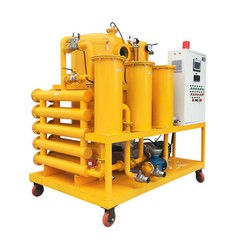
Now, the good news: most portable oil purifiers are designed to target exactly these two contaminants. Unlike fixed, on-site filtration systems that are bolted to one machine, portable units like the Mobile Oil Purifier are built to move easily between different pieces of equipment, which is perfect for boiler rooms where you might have multiple boilers, storage drums, and auxiliary lines that all need regular maintenance. But here’s where the “it depends” part comes in—not all boiler oil is the same, and not all portable purifiers are built to handle every type.
Let’s break down the two main categories of boiler oil and what you need to know about filtering them: light boiler fuels (like No. 2 diesel fuel, often used in small commercial or auxiliary boilers) and heavy fuel oils (No. 4, No. 5, or No. 6, common in large power plants and industrial facilities). Light boiler fuels are thinner, similar to hydraulic oils, and much easier to filter with a standard portable unit. Heavy fuel oils, though—they’re thick, viscous, and often have asphaltenes or other heavy residues that can gum up filters if the unit isn’t built for it. That’s where looking at the right type of portable system matters.
For light boiler oils, a standard Portable Oil Filtration Systems works perfectly. These units typically use a combination of centrifugal separation to remove free water and depth filtration to catch particulates down to 1 micron or smaller. I’ve had customers use these units on their No. 2 boiler oil for years, and the results are tangible: we’ve seen water content drop from 1,500 ppm to under 100 ppm (the recommended limit for most boilers) in a single pass, and particulate counts go from 10,000 particles per mL to under 1,000. That translates to less nozzle clogging, more even combustion, and lower fuel costs—something every plant manager cares about.
The trickier part comes with heavy fuel oils. Their high viscosity (sometimes 10 times thicker than light oil at room temperature) means standard portable purifiers might not pull contaminants out effectively, or even pump the oil at all. But that doesn’t mean you can’t use a portable unit here—you just need the right one. Look for units with heating capabilities to thin the heavy oil before processing, like our Mobile Oil Filtration Unit series, which has built-in temperature controls that can bring HFO up to the optimal viscosity for filtration without degrading the oil’s properties. Stainless steel components are a must here too, which is why our Stainless Steel Oil Purifier model is popular for HFO: it resists corrosion from the heavy, often acidic residues in older boiler oil, so the unit lasts longer and doesn’t contaminate the oil itself during processing.
Wait a second—what about portable hydraulic oil filtration units? Can you use those for boiler oil? That’s a common question, and the short answer is: only if the boiler oil is light. Our Portable Hydraulic Oil Filtration Unit is built for hydraulic fluid, which is designed to be slightly thicker than light boiler oil, but if you try to run heavy HFO through it, the pump will strain, the filters will clog in minutes, and you’ll waste time and money. It’s all about matching the unit’s specifications to the oil’s viscosity and contamination profile.


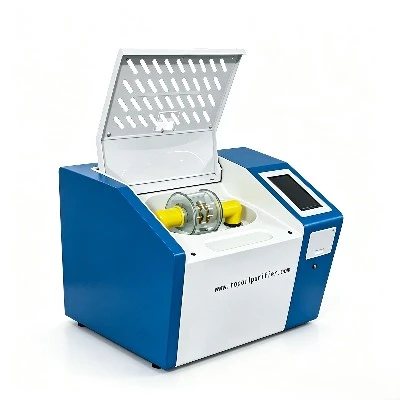
Now, let’s talk about the biggest mistakes I see people make when trying to filter boiler oil with portable units. First, they don’t test the oil first. You wouldn’t just pour unknown oil into your car engine, right? The same goes for boiler oil—testing for water content, particulate count, and viscosity tells you exactly what your purifier needs to remove, so you don’t overwork the unit or use filters that don’t work. Second, they skip pre-filtration for heavy oil. Running thick HFO straight through a standard filter will blow out the media, so adding a coarser pre-filter first catches the big particles before they reach the fine filters, extending filter life by 30-40%. Third, they don’t maintain the unit itself. A portable purifier that’s never had its filters changed or its centrifugal bowl cleaned will do a terrible job of filtering boiler oil—regular maintenance is non-negotiable.
I also want to address a common concern: is filtering boiler oil with a portable unit safe? After all, boiler rooms have hot surfaces, flammable oil, and sensitive equipment. Modern portable purifiers have built-in safety features: explosion-proof motors, temperature controls that shut off if oil gets too hot, and leak-proof hoses that prevent spills. All our units meet OSHA and NFPA standards for flammable fluid handling, so you don’t have to worry about adding a filtration step putting your facility at risk. I’ve seen one customer in Texas use our stainless steel portable unit in a 24/7 chemical plant boiler room for 5 years without a single safety issue, and they save $15,000 a year in fuel costs by keeping their boiler oil clean.
But here’s the honest truth: portable purifiers aren’t the best choice for every boiler oil scenario. If you have a large, fixed boiler system that’s running 24/7, a permanent on-site filtration system might be more cost-effective long-term. But for facilities with multiple smaller boilers, seasonal use (like a school that only uses boilers in winter), or for offloading oil from storage tanks before it’s put into service, a portable unit is perfect. It’s flexible, easy to move, and you can use it for other equipment too—like turbines, hydraulic lifts, or gearboxes—when you’re done with the boiler. That multi-use benefit is a big reason our customers keep coming back.
At the end of the day, the answer to “Can a portable oil purifier be used for boiler oils?” is: yes, if you pick the right unit for your specific boiler oil type, follow basic best practices, and don’t skip the testing. I’ve had skeptical plant managers come to me convinced their only option was to spend $50,000 on a fixed system, only to walk out of our warehouse with a portable unit for $12,000 that does the same job, and they still use it for other equipment around the facility six months later.
If you’re unsure which portable purifier is right for your boiler oil, or you want to learn more about testing your oil to see what contaminants you’re dealing with, we’re here to help. We work with facilities of all sizes, from small cafes with one boiler to large power plants with dozens of units, and we can help you find a solution that fits your needs and your budget. Reach out to our team to discuss your specific application, and we’ll walk you through every step to make sure you get the right equipment for your boiler oil filtration needs.
References
- American Petroleum Institute. (2021). Standard 570: Piping Inspection Code: In-Service Inspection, Repair, Alteration, and Rerating of Piping Systems. API Publishing Services.
- National Fire Protection Association. (2022). NFPA 31: Standard for the Installation of Oil-Burning Equipment. NFPA.
- Hydraulic Institute. (2020). Portable Filtration Best Practices for Industrial Lubricants and Fuels. HI Publications.
- Society of Tribologists and Lubrication Engineers. (2019). Filtration of Heavy Fuel Oils for Industrial Boiler Applications. STLE Transactions.
- Occupational Safety and Health Administration. (2021). Process Safety Management of Highly Hazardous Chemicals: Portable Equipment Safety Guidelines. OSHA.