

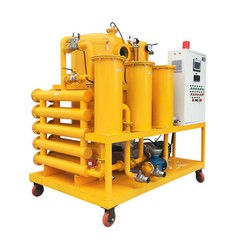
If you’ve ever worked with industrial lubricants or insulating oils, you know viscosity is non-negotiable. It’s the measure of an oil’s resistance to flow, and it directly impacts everything from the efficiency of a machine’s moving parts to the performance of a high-voltage transformer. Too thin, and parts rub together, wear out fast, or fail to lubricate properly. Too thick, and energy gets wasted as the oil struggles to circulate, leading to overheating and even system shutdowns. For oil professionals, maintaining consistent, target viscosity is one of the biggest daily challenges—especially as oil degrades over time, picking up contaminants that throw its flow properties off balance. That’s where an oil purifier comes in, and today I want to break down exactly how these systems interact with oil viscosity, drawing on 15 years of working as an oil purifier supplier, troubleshooting issues for teams in manufacturing, power generation, and transportation.
Let’s start with the basics of what makes oil’s viscosity change in the first place. Fresh, refined oil has a precise viscosity rating—think 32 cSt for light turbine oil, 46 cSt for general hydraulic lube, or specific ranges for transformer insulating oil. But as oil runs through equipment, a few key things happen: it picks up solid contaminants like metal shavings, dust, or pipe scale; absorbs water (even tiny amounts, like 50-100 ppm, can cause big problems); and reacts with oxygen from the air to form sludge, varnish, and larger molecular weight hydrocarbons. These changes don’t just degrade oil’s performance—they alter its viscosity dramatically. For example, water contamination can make lube oil’s viscosity drop by 10-15% because it acts as a thinner, while dissolved oxygen and oxidation byproducts can actually cause viscosity to rise, often by 20% or more, as large polymer chains form. Sludge and varnish are especially tricky because they’re sticky, particulate-like compounds that can make oil thicken unevenly, leading to clogs in filters and lines.


This is where oil purifiers step in, but not all purification processes affect viscosity the same way. Over the years, I’ve seen customers come to us with two very common myths: first, that any filtration will fix viscosity, and second, that purification always lowers viscosity. Neither is true. The type of oil you’re treating, the contaminants it has, and the specific design of your purifier all determine how it impacts viscosity. Let’s get into the mechanisms that matter most.
First, water removal—this is one of the most frequent viscosity-related issues our customers face. For lube oils and hydraulic oils that pick up condensation or washout water, a common viscosity dip is a top complaint. Vacuum dehydration is the workhorse technology most oil purifiers use here, including our Vacuum Dehydration Equipment, which we’ve refined over hundreds of installations. Here’s how it works: oil is heated slightly (usually to 40-70°C, never hot enough to damage the oil or create new byproducts) and introduced into a vacuum chamber, where low pressure causes water to boil off at a temperature much lower than its atmospheric boiling point. When water is removed from an oil that had a temporary viscosity drop from water contamination, restoring viscosity to its target is straightforward. I remember a customer in a steel mill last year who was having issues with their rolling mill hydraulic oil viscosity dropping so low that parts were wearing out 30% faster than expected. Their vacuum dehydrator wasn’t sized right, so it couldn’t pull out all the entrained water. We upgraded them to a properly matched system, and within two weeks, their oil viscosity stabilized back to 46 cSt, cutting their maintenance costs by nearly 25%. That’s a direct example of how targeted water removal can correct undesirable viscosity shifts.
But what if viscosity is rising because of oxidation and sludge? That’s where purification systems go beyond just removing water. Take our Lube Oil Purifier System, for example, which combines vacuum dehydration with coalescence filtration and adsorption media. Sludge and varnish are large, polar molecules that get trapped in the purifier’s adsorption filters, while smaller, dissolved water and gas are removed in the vacuum chamber. I’ve seen cases where lube oil had risen in viscosity by 18% after six months of use, all from oxidation byproducts. A lot of basic filter systems would only remove solid particles, leaving that sticky sludge in and viscosity still off. But a full lube oil purifier can strip those molecular contaminants, bringing viscosity back down to its original rating. That said, it’s important to note that you can’t reverse oil’s baseline properties—if oil has oxidized to the point where its base structure has broken down, a purifier can fix a temporary viscosity rise from contaminants, but it can’t restore it to like-new if the oil is too far gone. That’s why regular purification, not just emergency treatment, is key.
For transformer oils, the stakes are even higher. Transformer insulating oil doesn’t just lubricate—it insulates against electricity and cools the core and windings. Viscosity here has a direct impact on heat transfer: too thick, and heat can’t escape, leading to transformer overheating and potential failure. That’s why our Transformer Oil Cleaning System is designed specifically to address both insulation quality and viscosity consistency in high-voltage equipment. Transformer oil typically picks up two main contaminants: water from moisture ingress and dissolved gases from electrical discharge (partial discharges, arcing) that also contribute to oxidation. The vacuum system in a transformer oil purifier removes both water and gases, while fine filters catch solid sludge that forms over time. I worked with a utility company in the Midwest a few years back that had three 100MVA transformers with oil viscosity readings of 12 cSt, right on the edge of the acceptable range (11-13 cSt). They’d been using basic centrifugal separators, which only removed large solid particles, so the small water and gas contaminants were still there, making viscosity fluctuate daily. We installed our Transformer Oil Cleaning System, ran the oil through it for 48 hours, and their viscosity stabilized at 12.1 cSt, within the optimal range for their equipment. They’ve since signed a quarterly purification contract for all 12 of their distribution transformers, saving them an estimated $120,000 a year in premature transformer replacements.
Another common use case is insulating oil reclaiming, especially for industrial equipment where changing oil is expensive. Our Insulating Oil Reclaiming System goes beyond basic purification to remove even the most stubborn contaminants, including acids that form during oxidation. Acids are a big contributor to viscosity issues because they break down the oil’s molecular structure over time, leading to uneven viscosity and reduced lubricity. The reclaiming process uses special media to neutralize acids, then filters out the byproducts before drying the oil in a vacuum chamber. I had a customer in a power plant last year who had a 5,000-gallon batch of insulating oil that had been in a generator for three years. Its viscosity was sitting at 15 cSt, up from its original 12 cSt, because of acid and sludge buildup. They were looking at replacing the oil, which would have cost over $80,000 including disposal. Instead, we used our Insulating Oil Reclaiming System to process it. After 72 hours, the viscosity was back to 12.2 cSt, the acid number dropped from 0.8 to 0.02 mg KOH/g, and the oil passed all international insulation standards. That’s the power of a properly sized reclaiming system: it not only fixes viscosity but extends oil life by two or three years, turning a $80,000 expense into a $12,000 purification cost.
Of course, there are limits to what oil purifiers can do to viscosity, and it’s important to set realistic expectations. For example, if oil’s viscosity has risen because it’s been contaminated with another type of oil (like if hydraulic oil got mixed with gear oil), a basic purifier won’t separate those different base oils. You’d need a specialized system designed for oil blending separation, which is a different use case than standard purification. Also, overheating oil during purification can cause its own molecular breakdown, leading to unexpected viscosity changes—this is why temperature control is non-negotiable in any good oil purifier, and why we engineer our systems to stay below 80°C during processing, the safe threshold for most mineral-based oils and synthetic blends.
Regular maintenance of your oil purifier also affects its ability to control viscosity. A lot of customers buy a purifier and then forget to replace filters or clean the vacuum chamber, which reduces its efficiency over time. I’ve seen a customer whose purifier filters were 90% clogged after a year of use, so it couldn’t remove water or sludge properly, leading to their turbine oil viscosity rising by 25% in three months. Simple filter replacement fixed it, and we added a quarterly maintenance reminder to their service plan. The takeaway here is that oil purification isn’t a set-it-and-forget-it solution—it needs to be paired with regular oil testing to track viscosity and adjust your purification schedule as needed.
So, what does this mean for you if you’re managing industrial equipment? The key points to remember are: first, viscosity is a direct indicator of oil health, and shifts in viscosity almost always point to contaminants or degradation. Second, not all oil purifiers are equal—basic filtration might not address the root causes of viscosity change (water, small sludge particles, acids), while specialized systems like our Lube Oil Purifier System or Insulating Oil Reclaiming System are designed to target those issues. Third, regular purification and testing will help you maintain consistent viscosity, extend oil life, and avoid costly equipment failures.
If you’re dealing with fluctuating oil viscosity, or you’re looking to upgrade your purification process to save on maintenance and oil replacement costs, we’re here to help. Our team has worked with hundreds of facilities across industries to size the right oil purifier system for their specific needs, from small hydraulic systems to large power plant transformer fleets. Whether you need a compact Vacuum Dehydration Equipment for lube oil, a full-scale Insulating Oil Recycling Plant for high-volume transformer oil, or a customized solution for your unique application, we can walk you through the options. Don’t let viscosity issues hold your operations back—get in touch to discuss your requirements, and we’ll help you find a purification solution that keeps your oil flowing at the right viscosity, every time.
References
- API 1584, Standard for the Maintenance, Operation, and Replacement of Lubricating Oils for Large Reciprocating Internal Combustion Engines, American Petroleum Institute, 2021.
- IEC 60422, Mineral Insulating Oils in Electrical Equipment—Guide for Maintenance and Sampling, International Electrotechnical Commission, 2022.
- “Viscosity Changes in Petroleum Oils: Causes and Mitigation,” Tribology International, Vol. 168, 2022, pp. 107472.
- “Vacuum Purification of Insulating Oils: Performance Characteristics and Application Guidelines,” IEEE Transactions on Power Delivery, Vol. 34, No. 2, 2019, pp. 789-796.