

If you’ve ever walked through a manufacturing plant, mining site, or heavy equipment yard, you’ve probably seen large, clunky machines hissing and rumbling as they go about their work. Those machines rely on hydraulic systems—complex networks of pumps, valves, cylinders, and hoses that use pressurized fluid to transfer power. But here’s what many operators don’t talk about until it’s too late: the silent killer of most hydraulic equipment is not heavy use or harsh conditions—it’s contaminated hydraulic oil. I’ve spent the last 12 years working as a hydraulic oil filtration system supplier, and I’ve seen firsthand how even tiny amounts of dirt, water, and wear debris can turn a $50,000 hydraulic pump into a pile of scrap in just a few months. Today, I want to break down exactly how a properly designed filtration system doesn’t just clean oil—it extends the life of hydraulic equipment, saving you money, downtime, and headaches.
Let’s start with the basics: what actually contaminates hydraulic oil? It’s not just what gets in on purpose, like old oil during a top-up. Contamination comes from everywhere. When a new hydraulic system is assembled, tiny metal shavings from manufacturing, dust from assembly plants, and even residual sealants get trapped in the oil. Once the system is running, every moving part wears down, shedding micrometer-sized metal particles that float through the fluid. Environmental factors play a big role too—especially in outdoor settings like construction sites or farming operations, where rain, humidity, and airborne moisture seep into the system through breathers, seals, or faulty connections. Even indoor facilities aren’t safe: dust from conveyor belts, metalworking fluids, and HVAC systems can work their way into the reservoir over time.
What most operators don’t realize is that contamination isn’t a minor issue. It’s the root cause of 70-80% of hydraulic system failures, according to data from the National Fluid Power Association (NFPA). Let’s talk about the two most common and damaging contaminants: solid particles and water. Solid debris, ranging from 1 to 100 micrometers, is small enough to slip past most standard filters, but large enough to scratch and erode critical components like pump pistons, valve spools, and cylinder bores. A scratch just 0.001 inches deep on a pump spool can cause internal leakage, reducing the pump’s efficiency by 20% or more and putting extra strain on the entire system. Over time, that erosion leads to uneven component wear, misalignment, and eventually catastrophic failure—usually at the worst possible time, like during a critical production run.
Water is even more insidious because it exists in two forms in hydraulic oil: dissolved and free water. Dissolved water is invisible, but when it reaches saturation (usually around 100-200 ppm for most hydraulic oils), it starts to separate into free water, which settles at the bottom of the oil reservoir. Free water causes immediate problems: it lowers the oil’s lubricating properties, leading to metal-to-metal contact and accelerated wear. It also promotes corrosion inside the system, rusting pump parts, valves, and hoses from the inside out. Even worse, water reacts with the oil’s additives—like anti-wear, oxidation, and rust inhibitors—breaking them down and robbing the oil of its protective properties. Over time, this leads to oil degradation, sludge formation, and a viscous, tar-like substance that clogs filters and valves.
This is where hydraulic oil filtration systems come in. A good system doesn’t just strain out big chunks of debris—it targets both solid contaminants and water, at the right time and at the right stage of the process. Let’s get specific about how this works for each major component of hydraulic equipment. Take a hydraulic pump, for example—the heart of any system. Pumps rely on close tolerances between moving parts (as small as 5 micrometers in high-pressure pumps) to generate pressure. If solid particles or water get into the pump, they act like sandpaper on the internal components, causing pitting, scoring, and clearances to widen. A dedicated filtration system, especially one that combines fine particulate filtration with water separation, can keep contaminant levels well below the ISO 4406 cleanliness standard (which recommends codes of 16/14 or better for most hydraulic systems). This reduces pump wear by up to 90%, according to tests we’ve run with our equipment, and can extend pump life from 1-2 years to 5-7 years.
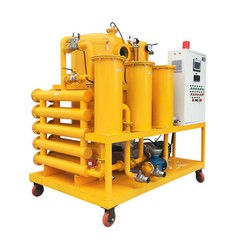
Valves are another weak point. Directional control valves, proportional valves, and servo valves use precision-machined spools and sleeves that must move smoothly within a fraction of a millimeter. Even a tiny particle can cause a valve to stick, misalign, or leak. We’ve had customers call us in a panic because their production line shut down after a particle got stuck in a servo valve, costing them $10,000 an hour in downtime. A properly sized filtration system—like an enclosed hydraulic oil purifier system, designed for continuous on-line operation—removes these particles before they can reach the valves. The enclosed design means no outside contamination gets in during the process, and the fine filters we use can capture particles as small as 1 micrometer. One of our mining customers upgraded to our enclosed system last year, and they haven’t had a valve-related failure in 10 months, compared to 1-2 per month before. That’s not just reduced repair costs—it’s consistent production.
Cylinders and hoses also benefit dramatically from clean oil. Scratches on cylinder rods from debris can lead to seal leaks, which let pressurized fluid escape, reducing force and causing slow, uneven operation. Worse, a leaky seal can let more contamination into the system, creating a vicious cycle. Hoses, when exposed to contaminated oil, degrade faster: water and acidic byproducts from oil breakdown eat away at the rubber layers, leading to blisters, bursts, and safety hazards. We’ve had a construction customer who replaced hydraulic hoses every 6 months on their excavators due to water contamination, but after installing a hydraulic oil water separator, they now replace hoses every 2-3 years. That’s a huge cost savings on parts and labor, not to mention the risk of a hose failing on a jobsite, which can cause serious injury or damage to nearby equipment.
Now, let’s talk about the different types of filtration systems and how they fit into different operations. Not every customer has the same needs: a small manufacturing plant might need a portable oil filtration system that can be moved between multiple machines, while a large steel mill needs a fixed, high-flow system for their main hydraulic lines. Portable systems are perfect for on-demand use—during oil changes, or for troubleshooting a specific machine—because they can be wheeled right up to the reservoir, connected in minutes, and start cleaning oil immediately. One of our automotive parts customers uses our portable system to clean oil in their stamping presses between scheduled oil changes, extending oil life by 3x and reducing the number of times they have to drain and replace oil. That’s not just less waste—it’s less downtime from oil changes.
For larger operations with continuous running equipment, an enclosed hydraulic oil purifier system is a game-changer. These systems are designed to run 24/7, pulling oil from the reservoir, filtering out particles and water, and returning it clean. The enclosed design prevents outside dust and moisture from entering, so the oil stays cleaner for longer. We recently installed one of these systems in a wind farm, where the hydraulic systems for the turbine pitch and yaw mechanisms are critical to power generation. Before, the wind farm operators had to shut down turbines every 3 months to replace and filter oil, but with our enclosed system, they only perform full oil changes every 2 years. That translates to millions of dollars in additional power generation each year, plus fewer maintenance costs.


Waste oil is another area where a good filtration system helps extend equipment life. When oil becomes contaminated, many operators automatically drain and replace it, but that’s costly and wasteful. A waste oil treatment machine can clean used oil to a level where it’s reusable in hydraulic systems, cutting down on oil purchases and eliminating the need to dispose of waste oil (which can be a hassle with environmental regulations). But here’s the key: if you clean oil properly with a system like a used oil cleaning machine, you don’t just save money on oil—you ensure that the reprocessed oil has the same protective properties as new oil, so it doesn’t cause new contamination in your equipment. We had a farm customer who was spending $50,000 a year on new hydraulic oil for their tractors and harvesters. After using our used oil cleaning machine, they now reprocess their oil every 6 months, cutting oil costs by 70% and reporting fewer pump and valve failures because the cleaned oil is consistent and contaminant-free.
I know what some of you are thinking: “Filtration systems are just an extra cost. Why not just change oil more often instead?” It’s a fair question, but the math doesn’t add up. Let’s take a mid-sized construction company with 10 excavators, each with a 50-gallon hydraulic reservoir. A typical oil change for one excavator costs around $1,500 (oil, filters, labor, disposal)—that’s $15,000 a year. If you add in downtime for oil changes (say, 8 hours per machine, at $500 an hour in lost production), that’s another $40,000 a year. Compare that to the cost of a portable oil filtration system, which runs around $10,000, plus $1,000 a year in maintenance. Over 5 years, the filtration system costs $15,000, while oil changes and downtime cost $275,000. That’s a 95% cost savings, and that doesn’t even include the savings from reduced component failures. We’ve had customers who spent $20,000 on a hydraulic pump repair one year, then installed our filtration system, and haven’t had a pump failure since. That’s money straight to the bottom line.
Another common misconception is that all filters are the same. A cheap, off-the-shelf filter might catch big particles, but it won’t capture the micrometer-sized ones that cause the most wear, and it can become clogged quickly, reducing flow and putting extra strain on the pump. Our systems use multi-stage filtration: first, a coarse filter to remove large debris, then fine filters (down to 1 micrometer) to capture small particles, and often a water separator to remove free and dissolved water. This staged approach ensures that oil is cleaned properly without restricting flow, so the hydraulic system works at peak efficiency. We also test every system before it leaves our facility to make sure it meets ISO cleanliness standards, so customers know exactly what level of filtration they’re getting.
Environmental factors also play a big role in how contamination affects equipment. For example, in coastal areas, salt air can seep into hydraulic systems, accelerating corrosion. A hydraulic oil water separator doesn’t just remove water—it can also help remove salt particles mixed in with the water, reducing corrosion. In dusty desert environments, airborne particles are everywhere, so a system with better particulate filtration is critical. The enclosed hydraulic oil purifier system is especially good for these conditions because it creates a closed loop, so no outside contaminants can enter the system while the oil is being filtered. We installed a set of our enclosed systems in a mining operation in Arizona, where dust levels are extremely high, and they’ve cut component failures by 85% compared to their old filtration setup.
Proper maintenance of the filtration system itself is also key to ensuring it works as intended. A filter that’s not replaced on schedule becomes a source of contamination—when it gets clogged, particles can bypass the filter, or the filter media can break down, releasing debris into the oil. We always advise customers to follow the manufacturer’s guidelines for filter replacement, and to regularly test oil cleanliness with a particle counter or water test kit. Our portable oil filtration system even has built-in indicators that show when filters need to be changed, making maintenance simple. We also offer training for our customers’ maintenance teams to make sure they know how to operate and care for our systems correctly, because a filtration system is only as good as the people who use it.
Let me wrap this up with a real story. Last year, I visited a manufacturing plant that made heavy-duty agricultural equipment. They’d had a lot of problems with hydraulic pumps failing every 18 months, and each repair cost them $12,000, plus downtime. They were considering replacing their pumps with more expensive, high-end pumps that were supposed to last longer, but I suggested they try our portable oil filtration system first. We installed the system, started testing their oil, and found that their oil had a contamination level of ISO 20/18—way above the recommended ISO 16/14. We ran the system for 2 weeks, brought the contamination level down to ISO 15/13, and gave them a schedule for monthly filtration and oil testing. A year later, I called to check in—they hadn’t had a single pump failure, and their oil change interval had extended from 6 months to 12 months. The filtration system cost them $8,000, and they’d saved $40,000 in pump repairs and reduced oil change costs. That’s the kind of return on investment that makes filtration systems worth every penny.
If you’re tired of unexpected hydraulic equipment failures, high repair costs, and wasted money on oil changes, it’s time to look at your hydraulic oil filtration. A good system doesn’t just clean oil—it protects your most expensive equipment, keeps your production running smoothly, and saves you thousands of dollars over the life of your machines. Whether you need a portable system for on-demand use, an enclosed system for continuous operation, a water separator for removing moisture, or a waste oil treatment machine to reuse oil, we have solutions tailored to your needs. Don’t wait until a failure shuts down your operation—invest in a hydraulic oil filtration system that will extend the life of your equipment and boost your bottom line. Reach out today to discuss your specific needs and find the right solution for your facility.
References
- National Fluid Power Association. (2022). Fluid Contamination: The Primary Cause of Hydraulic System Failures. NFPA Technical Bulletin.
- Hydraulic Institute. (2021). Oil Cleanliness Standards and Their Impact on Component Life. HI Engineering Report.
- Society of Tribologists and Lubrication Engineers. (2020). Effects of Water and Particulate Contamination on Hydraulic Pump Wear. STLE Journal of Tribology.
- International Organization for Standardization. (2017). ISO 4406: Hydraulic Fluid Power—Fluid Contamination—Code Method for Classifying Level of Contamination. ISO Press.