

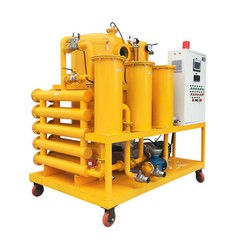
As a lubricant purification supplier, I’ve spent years working directly with maintenance teams, plant engineers, and fleet managers who rely on lube oil to keep their operations running smoothly. One question comes up again and again: “Why does pH matter so much when we’re purifying oil?” It’s easy to focus on removing water, particles, or sediment, but pH is a quiet, critical factor that can make or break how well your purification system works. Let’s break this down in plain, practical terms—no overly technical jargon, just what you need to know to protect your equipment and extend lube oil life.
First, let’s ground ourselves in what pH actually means for lube oil. Unlike water-based fluids, lube oil has a pH range that’s calibrated to keep it stable and effective. Most new industrial lubricants fall between a pH of 7.0 and 9.0—slightly alkaline, with typical specifications around 8.0 to 8.5. This balance isn’t random. The alkaline additives in the oil (like detergents and dispersants) are there to neutralize harmful acids that build up during operation. When these additives get depleted, the oil’s pH drops, becoming more acidic, and that’s when problems start.
Now, how does this pH level tie into purification? Let’s start with the core job of lube oil purification: removing contaminants that degrade oil quality. Water, particulate matter, oxidation byproducts, and sludge all contribute to poor oil performance, and pH impacts how these contaminants behave—and how easily they can be removed.
Acidic oil (low pH, below 7.0) is the first big issue here. When oil oxidizes from heat, pressure, or exposure to oxygen, it forms organic acids (like carboxylic acids) that lower pH. These acids don’t just corrode metal surfaces in your equipment—they also change the physical properties of the oil, making it harder to separate from water and particulates. Wait, why? Acidic molecules are polar, meaning they attract water molecules, so they form emulsions—stable mixtures of oil and water that standard separation methods can’t break. If you’ve ever struggled with oil that won’t dewater, even when your purification system is running at full capacity, acidic pH is often the culprit.
Let’s be honest: as a supplier, I’ve seen this firsthand. A mining customer in South America called us last year, frustrated because their Portable Oil Filtering Machine wasn’t removing as much water as they needed. Their lube oil pH was 5.2—way below the recommended range. The acids in the oil were binding to water molecules, creating a thick emulsion that their portable system couldn’t separate. Once we adjusted their purification approach to first balance the oil’s alkalinity (by adding a compatible neutralizing additive) before running filtration, their water levels dropped from 2,000 ppm to under 500 ppm in 48 hours. That story stuck with me because it’s a perfect example of how pH isn’t a secondary detail—it’s a precondition for effective purification.
It’s not just about acidic oil, though. Oil that’s too alkaline (pH above 9.5) can also cause problems. Excess alkalinity leads to what’s called “alkali-induced degradation,” where the alkaline additives react with other contaminants in the oil to form insoluble sludge and varnish. These solid particles are tiny, often less than 1 micron, and they can clog filters quickly. If your purification system is using standard filtration media without addressing excess alkalinity, you’ll end up with frequent filter changes and leftover sludge in the oil. That’s where a system like the Lube Oil Purifier System comes in—vacuum purification isn’t just for water removal; it can also strip excess alkaline compounds and dissolved acids when paired with multi-stage filtration. I often recommend this system to heavy equipment operators because it handles both water and chemical contaminants, including those tied to pH imbalance.
Let’s dive deeper into the science of how pH interacts with purification processes. Most lube oil purification uses three core methods: vacuum dehydration, mechanical filtration, and coalescing separation. Each of these is affected by pH in different ways.
Vacuum dehydration works by heating oil slightly (usually 120–160°F) and exposing it to a low-pressure environment, which makes water boil off as vapor. But for this to work, water has to be in a free state—not emulsified. As I mentioned earlier, acidic pH stabilizes oil-water emulsions because acid molecules create a charge barrier between oil and water droplets, preventing them from merging. The more acidic the oil, the stronger this barrier. Even with a high-vacuum system, emulsified water won’t vaporize. That’s why testing oil pH before running purification is non-negotiable. Many of our clients combine routine oil analysis (which includes pH testing) with their Lube Oil Filtration schedules, so they catch pH drops before emulsions form.


Mechanical filtration, whether it’s depth filtration or membrane filtration, removes solid contaminants like wear metals, sludge, and varnish. But pH controls whether these solids are charged positively or negatively, which affects how they bind to filter media. When oil is slightly alkaline, most solid particulates carry a negative charge, so they’re repelled from each other—and from filter media that’s often negatively charged. Wait, that might sound like a bad thing, but modern filtration media is engineered to attract specific charged particles. If pH is too low (acidic), the charge of the particulates flips, and they can pass through filters more easily, reducing filtration efficiency. Conversely, very high alkalinity makes particles stick together in large clumps, but those clumps can get caught on filter surfaces and cause clogging, leading to higher pressure drops and shorter filter life. That’s why matching pH to your filtration setup is key.
Coalescing separation, used in many portable and fixed purification systems, uses a media that attracts water droplets, making them merge into larger, easy-to-remove droplets. Again, pH plays a role here. Acidic oil has water droplets that are so small (often less than 1 micron) they don’t attract each other, so coalescing media can’t grab them. I remember a construction client who tried using a cheap portable coalescing filter to clean hydraulic oil, but their oil pH was 5.5. The filter removed less than 30% of the water, and they ended up damaging a $200,000 hydraulic pump. We recommended they test pH first, adjust it slightly by adding a small amount of neutralizing additive, and then use the Hydraulic Oil Filtration Equipment—which is designed to handle the specific emulsion challenges of acidic hydraulic fluids. Within a week, their pump water levels were at 400 ppm, and they avoided costly downtime.
Now, the next question is: how do you actually factor pH into your purification process? It’s not as complicated as it sounds, but it requires consistency. Here’s the step-by-step approach we recommend to all our clients:
- Test oil pH regularly: Most industrial lubricants should have their pH tested every 100–200 operating hours, or whenever you do oil changes. You can use a simple test kit (litmus paper or a digital pH meter) or send a sample to a lab for full analysis.
- Set your pH target: For most mineral-based lube oils, aim for a pH of 8.0–8.5. For synthetic lubricants, this range might shift slightly, so check your oil manufacturer’s specifications.
- Address pH issues before purification: If pH is below 7.0 (acidic), add a compatible neutralizing additive (make sure it’s approved by your oil supplier to avoid compatibility issues) to raise pH back to the target range. If pH is above 9.5, you may need to run a system that can strip excess alkaline compounds, like the specialized multi-stage Professional Hydraulic Oil Purification Solution we provide, which includes adsorption media to remove excess alkalinity.
- Adjust purification settings based on pH: If your oil is acidic, slow down the flow rate of your purification system to give more time for water separation. If it’s very alkaline, you may need to add a pre-filtration step to catch large sludge clumps before they enter your main filter.
I’ll be honest: some operators see pH testing as an extra step, but it’s one that saves money in the long run. Let’s do a quick cost-benefit analysis. A typical industrial lubricant can cost $5–$20 per gallon. If your oil’s pH drops and you can’t purify it effectively, you’ll have to change it more often, which means downtime and new oil costs. Plus, acidic oil causes corrosion and wear in equipment, which leads to expensive repairs. A $50 pH test kit and a $20 additive are nothing compared to a $10,000 pump replacement or a week of unplanned production downtime.
As a purification supplier, our whole goal is to make sure our equipment works as hard as you do. That means not just selling you a filter or a system, but helping you understand the factors that impact its performance—and pH is the biggest one people overlook. We’ve built our reputation on delivering solutions that work, whether that’s a portable unit for on-site oil cleaning or a full system for continuous purification. We’ve seen first-hand how adjusting pH leads to better purification, longer oil life, and less equipment damage.
If you’re tired of purification systems that underperform, or you’re dealing with frequent oil changes and unplanned downtime because of pH-related issues, we’re here to help. We can walk you through oil testing protocols, recommend the right purification equipment for your needs, and even provide on-site support to optimize your process. Don’t let hidden pH imbalances sabotage your lubrication strategy—reach out to us today to discuss your specific purification challenges and find a solution that works for you.
References
- L. R. Rudnick, “Lubricant Additives: Chemistry and Applications,” 2nd ed., CRC Press, 2009.
- American Society for Testing and Materials (ASTM) D664, Standard Test Method for Acid Number of Petroleum Products by Potentiometric Titration, 2021.
- J. B. Bosley, “Water-in-Oil Emulsions: Causes, Effects, and Solutions for Industrial Lubrication,” Journal of Lubrication Engineering, vol. 68, no. 4, pp. 22–27, 2012.
- K. G. Notnek, “The Impact of Oil pH on Filtration Efficiency and Equipment Wear,” Industrial Lubrication and Tribology, vol. 65, no. 3, pp. 189–195, 2013.