

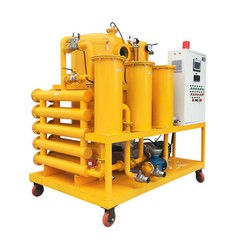
If you've ever worked in a commercial kitchen, food processing plant, or even a large-scale fried food operation, you know how quickly cooking oil degrades. After repeated use, it develops burnt particles, free fatty acids (FFAs), water, and food debris that not only alter the taste of your products but also pose safety and regulatory risks. That's where a cooking oil purifier comes in-but not all purifiers deliver the same results. For anyone considering investing in purification equipment, the key question is this: What is the purification consistency of a cooking oil purifier, and why does it matter for your operation?
As a supplier of cooking oil purification equipment, I've answered this question hundreds of times, and it's one that directly impacts your bottom line, product quality, and compliance. Purification consistency refers to the ability of a purifier to reliably remove contaminants from cooking oil batch after batch, without uneven results that lead to wasted oil, inconsistent product flavors, or equipment damage. Let's break down what that means, how it's measured, and how to ensure you're choosing a purifier that delivers consistent performance.
What Determines a Purifier's Purification Consistency?
Consistency isn't a vague benefit-it's rooted in the design, technology, and maintenance of the equipment. A cooking oil purifier that works perfectly one day but fails to remove water the next isn't delivering true consistency. The core functions that drive consistent purification are contaminant removal efficiency, process stability, and material build quality.
First, contaminant removal efficiency must be consistent across all runs. Cooking oil contaminants fall into three main categories: solid debris (food particles, carbon, and sediment), liquid contaminants (water and FFAs), and dissolved compounds (oxidized fats and pigments). A high-quality purifier targets all three, but the technology used directly impacts reliability. For example, a machine that relies solely on basic filtration might clog quickly as solid debris builds up, leading to reduced flow and poor removal efficiency over time. On the other hand, a centrifuge-based purifier separates contaminants by density, creating a more uniform separation-so every batch of oil goes through the same separation force, leading to consistent results.
Next, process stability is critical. If a purifier's temperature, pressure, or speed fluctuates between runs, it will produce inconsistent purification. Cooking oil viscosity changes with temperature: oil is thinner when hot, which means contaminants separate more easily at optimal temperatures. A machine with adjustable, precise temperature control maintains the right conditions for every run, regardless of how much oil you process. Stainless steel components also play a role here-low-quality materials can warp or degrade with repeated high-heat exposure, leading to leaks or uneven processing. That's why investing in a Stainless Steel Cooking Oil Purification Machine (linked here) is a smart choice for consistency; stainless steel resists corrosion, maintains structural integrity, and doesn't leach contaminants into the oil itself.
Finally, maintenance access and design affect long-term consistency. A purifier with hard-to-clean filters or parts that wear out quickly will eventually experience drops in performance if not serviced properly. Look for equipment with self-cleaning features or easy-to-replace components that keep operations running smoothly, run after run.
Common Causes of Inconsistent Purification (And How to Avoid Them)
Even a well-built purifier can deliver inconsistent results if it's used or maintained incorrectly. Here are the most common issues that break purification consistency, and how to fix them:
-
Inadequate Pre-Filtration: Skipping a pre-filtration step before processing can overload your purifier with large solid particles, causing filters to clog prematurely and reducing separation efficiency. A pre-filter removes the largest debris first, so your main purifier can focus on smaller contaminants. For extra thoroughness, a Cooking Oil Cleaning Machine (linked here) with integrated pre-filtration and purification steps eliminates this gap.
-
Poor Maintenance Schedule: Neglecting regular filter changes, centrifuge bowl cleaning, or temperature calibration leads to slow performance over time. For example, a dirty centrifuge bowl can't separate contaminants as effectively, so later runs will have higher levels of debris. We recommend a monthly maintenance check, even for machines that run daily, to keep consistency high.
-
Running Mixed Oil Types: Cooking oil from different sources (soybean, canola, palm) has slightly different densities and chemical properties. If you mix used oils before processing, your purifier has to adjust to varying conditions, leading to inconsistent results. Many modern purifiers, including the Cooking Oil Decoloration Machine (linked here), are designed to handle mixed oils with automated adjustment settings, making them more flexible and consistent for multi-operator facilities.
-
Overloading the Machine: Running more oil than your purifier's recommended capacity puts strain on its components, leading to uneven processing. For example, a machine rated for 500 liters per hour might struggle to process 700 liters, so some oil batches won't get fully purified. Always check your equipment's capacity and match your processing volume to it for consistent results.
Why Consistency Matters for Your Operation
At the end of the day, purification consistency isn't just a technical detail-it impacts every part of your business. Let's look at the real-world benefits of a consistent purifier:
-
Cost Savings: Consistent oil removal means you don't have to discard oil early. A study by the National Restaurant Association found that commercial kitchens can save up to $5,000 per year per fryer by using a high-purity purifier that extends oil life. Inconsistent purification means you'll throw away oil that's still usable, adding up to thousands in wasted costs annually.
-
Product Quality and Safety: Inconsistent contaminants lead to inconsistent flavors in your fried products. Customers can taste the difference between oil that's been properly purified and oil with leftover carbon particles or high FFA levels. Worse, unremoved water in oil can create a fire hazard in fryers, making consistency a safety issue as much as a financial one.
-


Choosing the Right Purifier for Long-Term Consistency
When shopping for a cooking oil purifier, don't just look at price-look at the features that drive consistent performance. Prioritize machines with stainless steel construction, precise temperature and pressure control, and automated maintenance alerts. For small to medium operations, a compact Cooking Oil Cleaning Machine with built-in filtration and purification is often the sweet spot, balancing consistency with ease of use. For larger recycling or food processing operations, Stainless Steel Cooking Oil Purification Machine and Cooking Oil Recycling Equipment offer the durability and volume capacity to maintain consistency across hundreds of runs.
Even the best purifier needs proper care, so look for suppliers that offer training and support to help you maintain consistent performance. At our company, we work with every client to tailor their purifier setup to their volume and needs, ensuring they get the consistent results they expect.
If you're ready to invest in a cooking oil purifier that delivers reliable, consistent purification for your operation, we invite you to reach out for a consultation to discuss your specific needs. We can help you compare models, understand maintenance requirements, and find the right equipment to save you money and improve product quality.
References
- National Restaurant Association. (2022). Commercial Kitchen Cooking Oil Management: Cost Savings and Safety Best Practices.
- Food and Drug Administration (FDA). (2021). Standards for Cooking Oil Quality in Commercial Food Service.
- International Association of Cooking Oil Recyclers (IACOR). (2023). Purification Consistency Guidelines for Recycled Cooking Oil Processing.
- Patel, R., & Mehta, S. (2022). "The Impact of Purification Technology on Cooking Oil Shelf Life and Product Quality." Journal of Food Processing and Preservation, 46(8), e16789.