

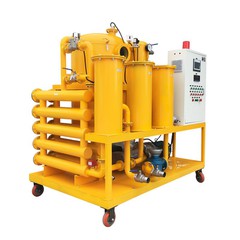
If you’ve ever stood near a marine engine room, a power plant, or a fleet fueling station, you’ve likely heard the hum of a fuel oil purifier working behind the scenes. These unassuming machines are the unsung heroes of fuel quality, removing water, sediment, and contaminants that would otherwise damage engines, reduce efficiency, and lead to costly downtime. But for anyone new to specifying, maintaining, or purchasing these systems, one of the first questions that comes up is straightforward: What is the flow rate of a fuel oil purifier?
I’m a fuel oil purifier supplier with years of talking to operators, maintenance teams, and fleet managers, and I can tell you this isn’t a one-size-fits-all number. A purifier’s flow rate is the backbone of its performance—get it wrong, and even the highest-quality machine won’t do its job. Let’s break this down, starting with the basics, then dive into how flow rate is determined, common ranges, and what to look for to match a purifier to your needs.
First, let’s define what we mean by fuel oil purifier flow rate. Simply put, it’s the volume of fuel a purifier can process in a given period—usually measured in liters per hour (L/h) or gallons per hour (GPH) for smaller units, or cubic meters per hour (m³/h) for large industrial and marine models. But flow rate isn’t just a number on a spec sheet. It’s tied directly to two core functions of a fuel oil purifier: separation efficiency and processing speed. If a purifier runs too fast, it doesn’t give the centrifugal force (or coalescing media, for certain designs) enough time to separate water and solid contaminants. Run it too slow, and you’re wasting energy, tying up equipment unnecessarily, and reducing throughput for your operation.
The confusion often starts here: many people assume all purifiers of the same “type” have the same flow rate. In reality, flow rate varies wildly based on the purifier’s design, the grade of fuel it’s processing, and your end goal. Let’s talk about the two most common purifier technologies, because their flow rate profiles are very different. The first is centrifugal purifiers, which use high-speed rotation to separate contaminants from fuel by density. These are common in large marine engines and power plants, where you need to process thousands of liters of heavy fuel oil (HFO) quickly. The second is coalescence-based purifiers, which use porous media to bind tiny water droplets into larger ones that can be easily separated. If you need portable, on-site processing of diesel or smaller volumes of fuel, coalescence units are often the way to go—and their flow rates are calibrated differently.
For example, centrifugal fuel oil purifiers for marine applications typically have flow rates ranging from 5 m³/h (around 220 GPH) for smaller auxiliary engines up to 100 m³/h (over 44,000 GPH) for main engine systems on large cargo ships. That’s a massive range, and it’s all tailored to the engine’s fuel demand. A container ship with a 70,000 kW main engine needs a purifier that can process enough heavy fuel oil to keep up, while a fishing vessel with a small auxiliary engine only needs a unit that can handle a few hundred liters an hour.
Coalescence units, by contrast, tend to have lower flow rates per unit volume, but they’re more flexible for different fuel types. Take a Portable Coalescence Separation Oil Purifier, for instance—designed for on-site fuel polishing and emergency fuel cleanup. These units often have flow rates between 100 L/h (26 GPH) and 1,500 L/h (396 GPH), making them ideal for smaller fleets, backup generators, or cleaning stored diesel that’s been contaminated with water or algae. But don’t let the lower number fool you: coalescence purifiers work best when you give them enough time to coalesce water droplets, so they’re not built for the same high-throughput tasks as large centrifugal units. If you tried to run a portable coalescer at a marine-grade centrifugal flow rate, it would miss small water droplets and leave sediment in the fuel.
Now, how do manufacturers determine the right flow rate for a given purifier? It starts with understanding the “residence time” of fuel in the separation chamber. Residence time is how long each particle of fuel spends inside the unit being processed, and it’s critical for separation efficiency. For centrifugal purifiers, residence time is usually between 1 and 5 minutes—enough time for density differences to separate water and solids from the fuel. To calculate the required flow rate for a centrifugal unit, manufacturers take the volume of the separation bowl and divide it by the desired residence time. For example, a bowl with a 100 L volume needs a flow rate of 2,000 L/h to get a 3-minute residence time (100 L x 60 minutes / 3 minutes = 2,000 L/h). That’s a simplified example, but it shows the core math.
For coalescence units, residence time is a bit longer—usually 5 to 15 minutes—because the media needs to trap and merge tiny water droplets (often as small as 1 micron) before they can be filtered out. That’s why their flow rates are lower: if you push too much fuel through the coalescing bed, the droplets don’t have time to bind, and they pass through with the clean fuel. That’s also why the Portable Coalescence Separation Oil Purifier is designed with variable flow controls, so operators can adjust the rate based on how contaminated the fuel is. If you’re processing fuel with a high water content, you slow the flow down to ensure all water is removed; if it’s only slightly contaminated, you can run at a faster rate to save time.
Another factor that impacts flow rate is the grade of fuel you’re processing. Heavy fuel oil (HFO), which is used in large marine engines and power plants, is thick, viscous, and has higher density differences between fuel and water than diesel. That means centrifugal purifiers can run at higher flow rates when processing HFO, because the density difference makes separation easier. But if you’re processing diesel—lighter, less viscous, more prone to emulsifying with water—you need to adjust the flow rate. Even a standard centrifugal purifier for diesel will have a lower optimal flow rate than one for HFO, to account for the fuel’s lower density contrast and tendency to mix with water.
This is where choosing the right purifier technology for your fuel type really matters. If you’re looking to clean diesel for a fleet of trucks or backup generators, a Diesel Fuel Polishing Machine might be the better fit than a large centrifugal unit. Diesel polishing machines, which are often coalescence-based, are designed specifically for diesel fuel, with flow rates tailored to remove water, sediment, and even microbial contaminants. A typical diesel polishing machine might have a flow rate between 500 L/h and 10,000 L/h, depending on the size, and they’re built to handle the unique properties of diesel without wasting energy or risking separation efficiency. For example, if you’re cleaning 10,000 liters of stored diesel, a diesel polishing machine can process that volume in a few hours, while a large centrifugal unit would take far longer and might not remove the fine water droplets that cause engine injector issues.
I’ve seen too many operators make the mistake of picking a purifier based on flow rate alone, without considering their actual needs. A few years back, I worked with a fleet company that bought a high-flow centrifugal purifier for their diesel delivery trucks. They saw the flow rate on the spec sheet and assumed it would save time, but their trucks started having injector failures within a few months. When we tested their system, we found the purifier was running at double the recommended flow rate for diesel—so it was missing 2-micron water droplets that were clogging the injectors. Once we adjusted the flow rate to match the Diesel Fuel Polishing Machine specifications, their injector issues stopped, and they saved 15% on maintenance costs. That’s a perfect example of how flow rate is about more than speed—it’s about matching the machine to your fuel and your goals.
Another common point of confusion is between flow rate and capacity. Some manufacturers advertise “maximum flow rate” as a selling point, but that number is often only achievable under ideal conditions: perfectly clean fuel, steady pressure, and a specific fuel temperature. In real-world use, especially with contaminated fuel or fuel that’s cold (and thus thicker), your optimal flow rate will be lower. That’s why it’s important to look at the “rated flow rate” rather than just the maximum. The rated flow rate is the speed at which the purifier meets its separation efficiency standards—usually 99.9% water and solid removal for most industrial applications. For example, a Coalescer Separator, which is designed for heavy-duty separation tasks, has a rated flow rate that’s tested to meet strict efficiency standards, so you can trust that it will perform as advertised even when processing dirty fuel.
Temperature also plays a big role in flow rate. Fuel viscosity goes up when it’s cold, which makes separation harder—both for centrifugal units and coalescence units. If you’re operating in a cold climate, you’ll need to adjust your flow rate downward to compensate for higher viscosity. That’s why many marine purifiers have heaters built into the system to keep fuel at a consistent temperature, ensuring the flow rate stays within the optimal range. If you don’t heat the fuel, you’ll have to run the purifier slower to get the same separation efficiency, which cuts into your throughput.
So, what flow rate should you actually be looking for? Let’s break it down by use case, to make this concrete:
- Small-scale on-site processing (backup generators, small fleets): 100 L/h to 1,500 L/h. For this, a Portable Coalescence Separation Oil Purifier is ideal, as it’s easy to move between tanks and adjust the flow rate to match the job.
- Medium fleet diesel polishing: 2,000 L/h to 10,000 L/h. A Diesel Fuel Polishing Machine in this range will handle enough fuel to keep a fleet running, with the right separation efficiency for diesel.
- Marine main engines or power plants: 5 m³/h to 100 m³/h (220 GPH to 44,000 GPH). Large centrifugal purifiers here are tailored to the engine’s fuel demand, with flow rates calibrated for heavy fuel oil.
- Industrial fuel storage cleaning: 1,000 L/h to 5,000 L/h. A Coalescence Separation Oil Purifier in this range will quickly clean large storage tanks without sacrificing separation quality.
But here’s the key: these are general ranges, and the only way to get the exact flow rate you need is to talk to someone who understands your specific operation. Every fleet, every engine, every fuel storage setup is different. A purifier that works for a cargo ship won’t work for a single backup generator, and vice versa.


As a fuel oil purifier supplier, my job isn’t just to sell a machine with a high flow rate. It’s to help you pick a purifier that will remove contaminants effectively, keep your engines running, and save you money in the long run. That means asking questions: How much fuel do you process per day? What type of fuel is it? How contaminated is it? What’s your temperature range? Once we have those answers, we can find a purifier with the right flow rate—and the right technology—to fit your needs.
If you’ve been researching fuel oil purifiers and wondering about flow rates, or if you’ve had issues with a purifier that’s not performing as expected, I’m here to help. Whether you need a portable unit for on-site cleanup, a diesel polishing machine for your fleet, or a large centrifugal purifier for a marine or power plant operation, we have options calibrated to meet your specific flow and efficiency requirements.
Ready to find the right fuel oil purifier for your needs? Let’s connect to discuss your requirements, and we can help you choose the ideal system for your operation.
References
- American Petroleum Institute (API). (2019). Standard for Purifiers and Clarifiers for Marine Fuel Oils. API Publication 671.
- International Maritime Organization (IMO). (2021). Guidelines for Fuel Oil Quality and Purification for Marine Vessels. MEPC.1/Circ.850/Rev.1.
- Kołodyńska, D., & Włodarczyk-Makuła, M. (2020). Coalescence technology for water-oil separation: A review. Separation and Purification Technology, 241, 116687.
- Society of Naval Architects and Marine Engineers (SNAME). (2018). Marine Machinery Guide: Fuel Purification Systems. SNAME Publication 5-7.
- Zhang, L., et al. (2022). Flow rate optimization for centrifugal fuel purifiers based on residence time distribution. Journal of Marine Engineering and Technology, 21(3), 245-253.