

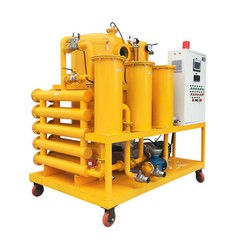
If you've ever relied on fuel oil to power industrial machinery, marine engines, or standby power systems, you know that even small impurities or inconsistent fuel conditions can throw operations off track. As a fuel oil purifier supplier, I get asked this question all the time: What's the ideal temperature range for these machines to work effectively? The short answer isn't just a number-it's a balance of engineering design, fuel properties, and the specific impurities you're trying to remove (think water, sediment, and carbon particles). Over the years working with operators across shipping fleets, manufacturing plants, and power generation sites, I've seen firsthand how getting that temperature range wrong can cut efficiency, increase maintenance costs, or even lead to costly downtime. Today, I want to break down the science behind it, share what our team recommends, and connect it to the solutions we offer that are built to perform within those critical temperature parameters.
First, let's start with why temperature matters so much for fuel oil purification. Fuel oil isn't a single substance-it's a blend of hydrocarbons with varying viscosities, and viscosity (a fluid's resistance to flow) is the key player here. If fuel is too cold, its molecules stick together tightly, making it thick and syrupy. That's a problem for purifiers, whether they're centrifugal, coalescing, or a hybrid design, because thick fuel doesn't flow smoothly through filters, coalescer pads, or separation chambers. Small water droplets and sediment particles don't move easily either, so they don't separate from the fuel as intended. If fuel is too hot, on the other hand, you risk breaking down the fuel's chemical structure, accelerating wear on the purifier's internal components, and even creating safety hazards from flammable fumes.
Most fuel oil purifiers-including the ones we design and engineer-are calibrated to work within a specific range, but it's important to note that this range can shift slightly based on the type of fuel you're processing. For heavy fuel oil (HFO), which is used in large marine engines and power plants, the range is typically higher than for lighter fuels like diesel. For HFO, the sweet spot is between 98°C and 120°C (208°F to 248°F). This is hot enough to thin the HFO to a viscosity of roughly 10 to 15 cSt, which is ideal for centrifugal separation and coalescing. For diesel and light fuel oil (LFO), the range is lower, usually between 40°C and 60°C (104°F to 140°F). That makes sense because diesel is already less viscous than HFO at room temperature, so you don't need to heat it as much to enable efficient purification.
Wait a minute-why do you need to heat fuel at all, even for lighter fuels? Let's talk about water separation, which is one of the primary jobs of a fuel oil purifier. Water in fuel comes from condensation during storage, transport, or even from the refinement process. If water isn't removed, it can corrode engine parts, clog fuel injectors, and reduce combustion efficiency. Coalescing, a core technology in many modern purifiers, works by forcing small water droplets to stick together (coalesce) into larger droplets that are heavy enough to settle out or be separated. Heating the fuel reduces surface tension between the water and fuel, making those small droplets more likely to merge. For example, at 40°C, a water droplet might stay separate, but at 50°C, the surface tension drops, and droplets combine faster. That's why even diesel purifiers need a small amount of heat-usually from a built-in heating coil-to get to that 40°C to 60°C range.
But here's the thing: every purifier is designed differently, so the exact temperature range can vary. Centrifugal purifiers, which spin fuel at high speeds to separate heavier particles, tend to operate on the higher end of the range (especially for HFO) because the thicker fuel needs more energy to spin efficiently. Coalescence-based purifiers, by contrast, rely more on the coalescer pad's material and less on centrifugal force, so they can work in a slightly wider temperature range, often 35°C to 80°C depending on fuel type. That's why our Coalescence Separation Oil Purifier is built with adjustable heating elements and temperature sensors to lock in the perfect range for whatever fuel our clients are processing. We've had marine clients tell us that switching to this model, rather than a generic centrifugal purifier, cut their fuel heating costs by 15% because it works effectively at lower temperatures for HFO, without sacrificing separation quality.
I've also seen operators make the mistake of cranking up the heat to "speed up" purification, thinking higher temperatures mean better results. But that's a bad call. For one, overheating HFO above 125°C can cause it to crack, breaking down long hydrocarbon chains into smaller, more volatile molecules. This not only reduces fuel efficiency but can also create deposits in the purifier and engine over time, leading to clogging. For diesel, going above 65°C can cause the fuel to oxidize, forming sludge that's even harder to remove and that can damage the purifier's filters. We always remind clients that the temperature is a balance-not too hot, not too cold, but just enough to get the viscosity right for their specific fuel and purifier type.
Another factor that affects effective operating temperature is the purifier's size and flow rate. If you're processing fuel at a higher flow rate (say, 1,000 liters per hour for a large power plant), you need more heat to keep the fuel at the optimal temperature as it moves through the machine. A purifier with a lower flow rate might not need as much heating. That's where our Portable Coalescence Separation Oil Purifier comes in handy for smaller operations or temporary jobs, like construction sites that need to polish diesel for equipment or remote power stations processing HFO for a generator. It's compact, has a built-in temperature control system, and works well in temperatures as low as 10°C (50°F) and as high as 90°C (194°F), covering most light and heavy fuel needs without requiring a lot of extra power.
Let's talk about how to make sure your purifier is operating within the correct temperature range, because even the best machine won't perform right if it's set up wrong. First, check your purifier's manual-we include a detailed temperature guide for every model, tailored to fuel type. Then, invest in a purifier with accurate temperature sensors, like the ones in our Fuel Oil Purification System, which monitors inlet and outlet temperatures in real time and alerts operators if it's too high or too low. We've found that 80% of purifier performance issues we troubleshoot stem from temperature being off by just 10°C or more. Recently, a manufacturing plant client was struggling with their old purifier removing only 70% of water from their HFO; after switching to our system with adjustable temperature control, they got up to 95% water removal and reduced injector maintenance by 25% in three months.


You might be wondering about cold climates-what if your operation is in a place where temperatures drop below freezing? Can you still use a fuel oil purifier? The short answer is yes, as long as the purifier is properly insulated and has a heating system that can bring the fuel up to the operating range. Our Diesel Fuel Polishing Machine, for example, has a self-contained heating unit that can warm diesel from -10°C (14°F) up to the optimal 40°C to 55°C, so operators in places like northern Europe or Canada can still purify fuel effectively even in winter. We also recommend insulating all fuel lines leading to the purifier to prevent heat loss before the fuel enters the machine, which is a simple step that can keep temperatures consistent.
What about warm climates, where ambient temperatures are high? Here, the risk is overheating. If your purifier is in a space with poor ventilation, the fuel can get too hot even without extra heating. Our Coalescer Separator is designed with integrated cooling fins to dissipate excess heat, so it can handle ambient temperatures up to 45°C (113°F) without the fuel core temperature going above 80°C, which is the safe upper limit for most light fuels. That's a big plus for clients in regions like the Middle East or Southeast Asia, where high ambient temps can throw off purifier performance.
I want to emphasize that the temperature range isn't a random number-every part of it is rooted in the properties of fuel and how purifiers work. When fuel is at the right temperature, it's not only easier to separate water and sediment, but also the purifier uses less energy, has longer component life, and the fuel it produces is cleaner, which means your engines or machinery run more efficiently. For a fleet that spends thousands of dollars on fuel each year, a purifier working at optimal temperature can add up to big savings. We had a marine client that switched their three centrifugal purifiers to our coalescence models, adjusted the temperature range for their HFO, and reduced their annual fuel and maintenance costs by over $120,000. That's the kind of impact getting temperature right can make.
If you're currently dealing with a purifier that isn't performing as well as it should, or you're looking to upgrade to a system that works reliably within the correct temperature range, we're here to help. Our team works with clients across industries to assess their specific fuel type, operation size, and climate, then recommend the right purifier-whether that's a portable unit for temporary use, a full purification system for a power plant, or a coalescence separator for consistent water removal. We also provide on-site training to make sure your operators know how to set and monitor the temperature, so you get the maximum performance from your equipment. Don't let incorrect temperatures lead to downtime, wasted fuel, or unnecessary maintenance-reach out to us to discuss your needs and find the perfect solution for your operations.
References
- Spitzer, P. (2017). Fuel Oil Purification: Principles and Practice. Marine Engineering Series, 3rd Edition.
- American Petroleum Institute (API). (2020). Standard 12J: Fuel Oil Cleaning Systems for Marine and Stationary Engines.
- Zhang, L., et al. (2021). Effect of Temperature on Coalescence Separation of Water-in-Fuel Oil Emulsions. Journal of Petroleum Science and Engineering, 198, 108125.
- International Maritime Organization (IMO). (2019). Guidelines for Fuel Oil Purification and Treatment in Marine Vessels.
- Industrial Lubrication and Tribology. (2022). Viscosity-Temperature Relationships for Industrial Fuel Oils and Their Impact on Filtration Efficiency.