

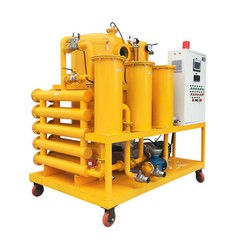
Hey there! As a supplier of turbine oil purifiers, I often get asked about the environmental requirements for using these machines. It's super important to understand these conditions to make sure the purifier works well and last long. Let's dive right into it!
Temperature
Temperature plays a huge role in the performance of a turbine oil purifier. You see, the viscosity of turbine oil changes with temperature. If it's too cold, the oil can become thick. Then, it might be hard for the purifier to pump and filter the oil. This can lead to clogged filters and extra wear on the pump.
On the flip side, if it's too hot, the oil can break down chemically. It might start to form sludge and varnish. These can damage the turbine parts and reduce the efficiency of the purifier. So, generally, it's best to use the purifier in an environment where the temperature is between 10°C and 40°C (50°F and 104°F). If you're working in a colder place, you may need to pre - heat the oil. And in a hot area, some cooling systems might be necessary. Check out our Steam Turbine Oil Purifier, which is designed to handle a wide range of temperatures, but it still performs best within this optimal range.
Humidity
Humidity is another factor that can't be ignored. High humidity can cause water to condense in the oil. When water gets into the turbine oil, it can lead to corrosion of the turbine components. Also, it reduces the insulating properties of the oil. This can be a huge problem, especially for electrical turbines.
Ideally, the relative humidity in the area where the turbine oil purifier is used should be below 70%. If the humidity is high, you can use dehumidifiers in the room. We have the Turbine Oil Restoration Machine, which has some level of moisture - removal ability. But a good environment in terms of humidity helps it work even better.
Air Quality
The air around the turbine oil purifier can also affect its performance. If the air is full of dust or other contaminants, these can get into the oil during the purification process. This means the purifier has to work harder to clean the oil. And over time, the filters might get clogged more quickly, leading to more maintenance and replacement costs.
The purifier should be used in a relatively clean environment. If it's in an industrial setting where there's a lot of dust, it might be a good idea to install air filters near the purifier. Our Turbine Oil Cleaning services take into account the air quality around the machine to ensure effective purification.
Ventilation
Proper ventilation is key. The turbine oil purifier generates heat during operation. Without good ventilation, this heat can build up around the machine. High temperatures can not only affect the performance of the purifier but also pose a safety risk.
There should be enough space around the purifier for air to flow freely. Make sure the room has vents or fans. If it's an outdoor setup, position the purifier in an area where there's natural air movement. Our Turbine Oil Purification Plant is designed to be energy - efficient, but good ventilation still helps it run smoothly.


Stability of the Installation Site
The place where you put the turbine oil purifier needs to be stable. A shaky or uneven surface can cause the purifier to vibrate during operation. This not only makes noise but can also damage the internal components of the machine over time.
Make sure the installation site is flat and firm. If it's on a platform, it should be well - supported. This helps the purifier work efficiently and extends its service life.
Power Supply Stability
A stable power supply is essential for the proper functioning of the turbine oil purifier. Fluctuations in voltage or frequency can cause the motor to run at an incorrect speed. This can lead to reduced filtration efficiency and even damage to the motor.
It's recommended to use a voltage stabilizer if the power supply in your area is unreliable. Also, make sure the electrical wiring is in good condition to avoid electrical hazards.
Influence on Surroundings
When using a turbine oil purifier, it's also important to consider its impact on the surroundings. The purifier might make some noise during operation. If it's installed in a quiet area, the noise could be a nuisance. You can use sound - insulating materials around the purifier to reduce the noise level.
Also, during the purification process, there might be some waste oil or contaminants collected. These need to be disposed of properly according to environmental regulations.
Sump Location
The location of the oil sump can have an impact on the purifier's operation. The sump should be easily accessible so that the purifier can be connected to it without any hassle. Also, the height difference between the sump and the purifier affects the pumping process. If the sump is too low, it may be difficult for the purifier to draw the oil.
To sum it up, the proper environmental conditions are crucial for getting the most out of your turbine oil purifier. By paying attention to temperature, humidity, air quality, ventilation, chemical environment, installation stability, power supply, and the impact on surroundings, you can ensure that your purifier operates efficiently and has a long service life.
If you're in the market for a high - quality turbine oil purifier or have any questions about environmental requirements, feel free to reach out. We're here to help you make the right choice and ensure your turbines run smoothly.
References
- "Handbook of Lubrication and Tribology: Volume II: Theory and Design" by Bo O. L. Jacobson
- "Turbine Oil Maintenance and Monitoring" by various industry experts